
The Goddess of Serenity
When Pope Benedict asked Giotta for a drawing to prove his worth as an artist, Giotta drew a perfect circle freehand. Perfection is a powerful message. Some might say exact same for the Citroën DS, specifically the undeniably gorgeous DS convertible. Without question one of the most elegant cars to have graced the pavement. Even its name, fittingly, was a pun. Spoken aloud in French, “DS” sounds exactly like déesse—“goddess.” This was a car that aspired to something higher than transportation. If you disagree your opinions you are wrong and may you never eat good food again.
The Citroën DS was an incredible vehicle, a game changer in the automotive world, saying it was far ahead of its time does not merely describe the impact on the automotive world. It not only helped revolutionize the cars we drive today but the entire car industry. It’s a story that has a rich and full history, a suspension so advanced and comfortable that Rolls Royce wanted to lease the technology, innovations still being used today, design far beyond a poet’s description and it even saved the life of PM in an assassination attempt.
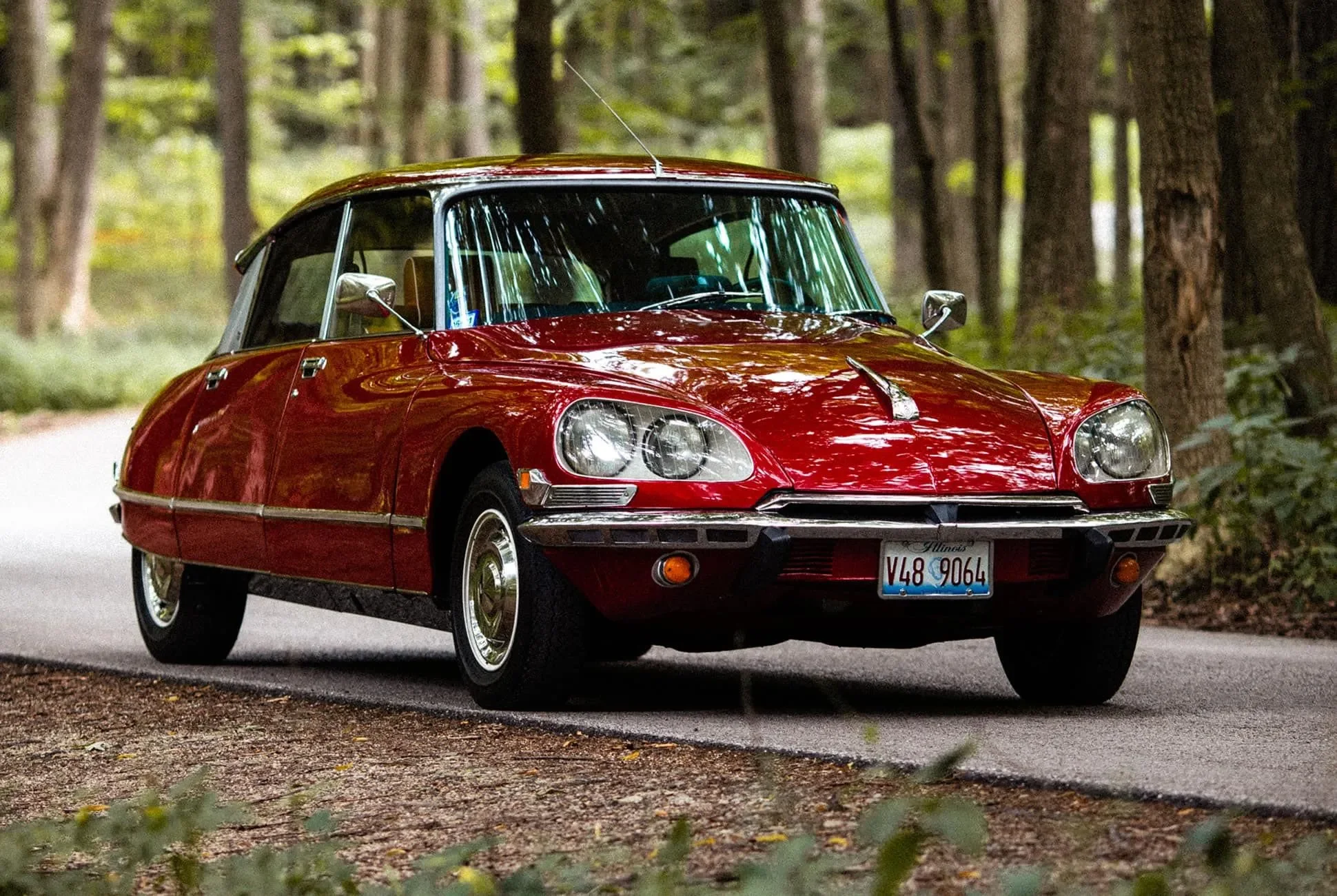
I have always been fascinated by Citroën and its unique suspension. I still remember the first time I saw one—I was about eight or nine, and we had just moved to Hong Kong, which was still a British colony at the time. It felt as though the blinders I’d been wearing about the world suddenly dropped away like a stone. One of those blinders was the sheer abundance of vehicles I was suddenly exposed to. Around every corner was something new, and one of those moments came in the form of a Citroën XM. I vividly remember asking my dad, full of excitement and admiration, “What is that car?” He told me it was a Citroën and that it had the smoothest ride of any car. He then went on to explain how the rear suspension could rise and fall to create comfort in a very technical way. All I heard was that the rear of the car could go up and down, and to me that was the coolest thing ever. Since then, I’ve been fascinated and curious about the company and the ideas behind that suspension. I can’t quite put my finger on it, but I’ve always thought Citroëns looked futuristic—so different from the usual cars rolling down the street. They had that certain je ne sais quoi.
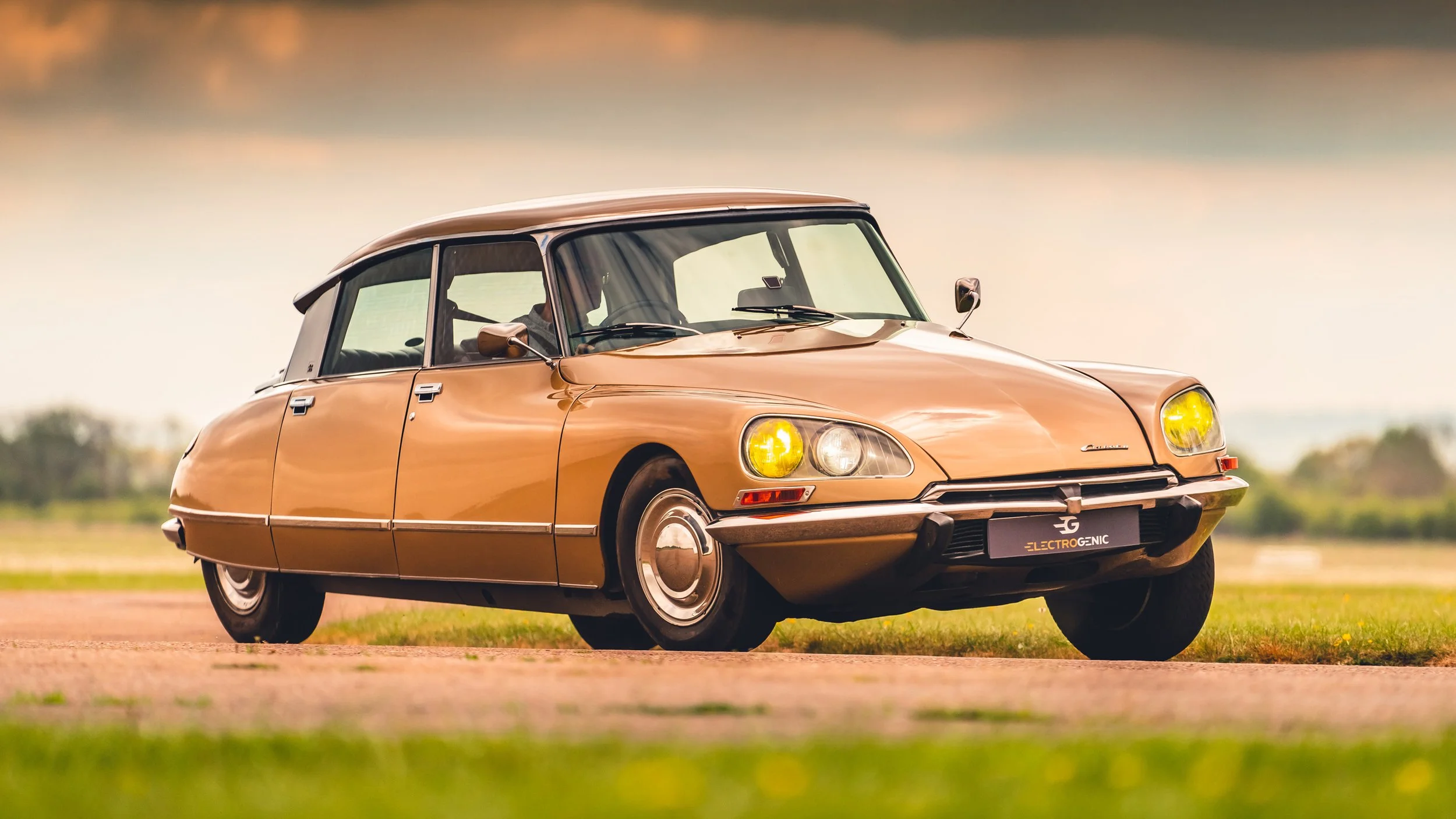
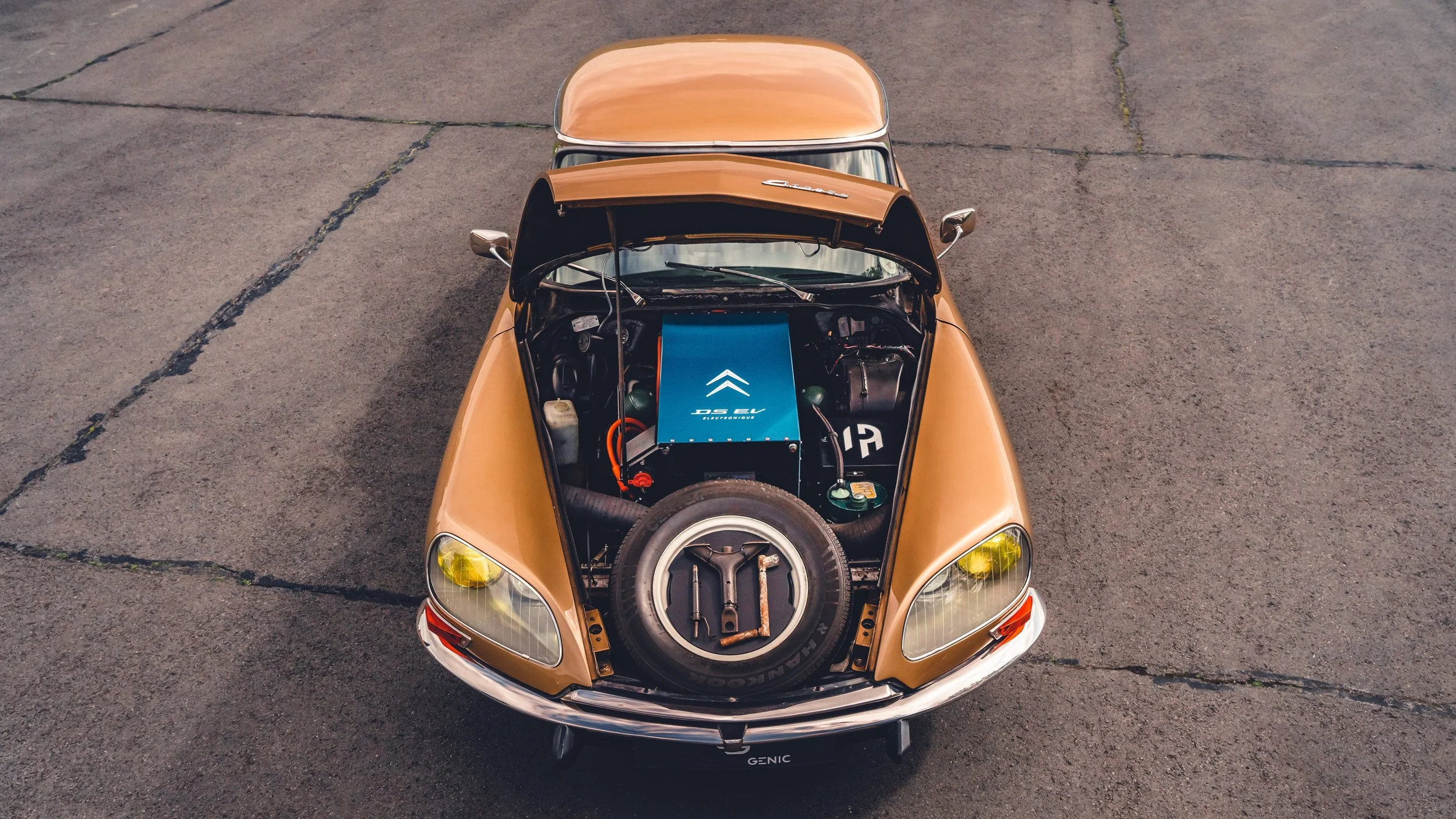
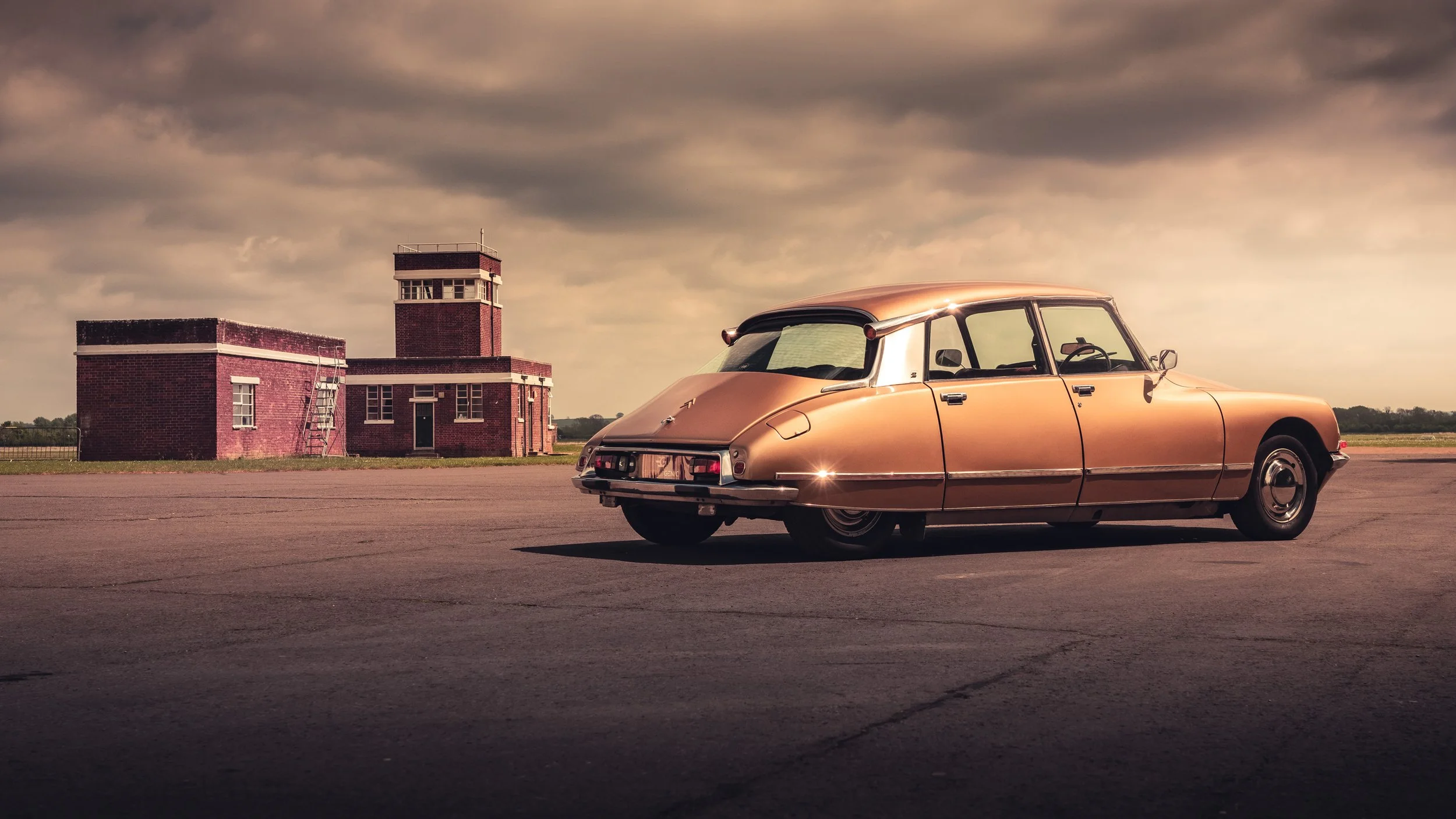
Quick little history on the DS and its importance. When the Citroën DS arrived, it didn’t merely look like the future—it behaved like it had already been there and come back with notes.Unveiled on October 6, 1955, at the Paris Motor Show, the DS landed with the subtlety of a flying saucer touching down on the Grand Palais floor. Within fifteen minutes, 743 orders were placed. By the end of the first day, 12,000 buyers had signed up. Ten days later, 80,000 deposits had been taken—an automotive record that would stand for more than sixty years. For context, it took the Tesla Model 3 until 2016 to finally dethrone it. Clearly, the world had been waiting for something like this, even if it didn’t yet know what it was.
Part of the magic lay in the way the DS looked. Sculpted by Italian designer and artist Flaminio Bertoni, and engineered under the guidance of French aeronautical engineer AndréLefèbvre, the car seemed to ignore the sharp edges and upright conventions of its era. Its body was smooth, with a long, low, aerodynamic teardrop shape. It had covered rear wheels, crome accents and minimalist detailing, frameless doors, clean flowing lines, it was almost organic, ever changing—less automobile, more apparition. It didn’t so much sit on the road as glide above it, which turned out to be an entirely accurate impression.
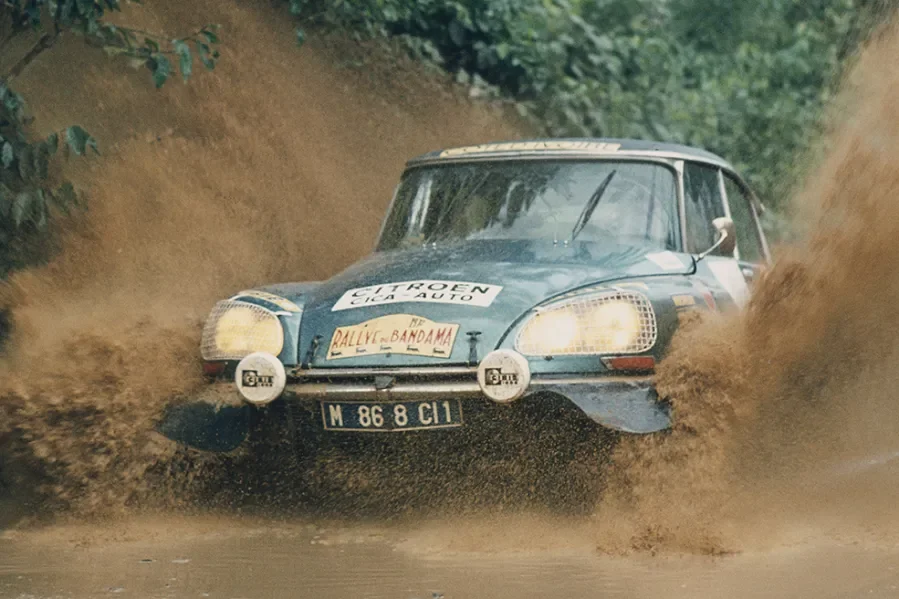
The DS’s greatest trick was a self-leveling suspension called the hydropneumatic, it used hydraulic fluid and nitrogen spheres, developed in-house by Paul Magès, an engineer whose brilliance bordered on the mischievous. It was unlike anything else on the road. It replaced traditional springs with pressurized hydraulic spheres, allowing the car to automatically maintain ride height regardless of load—and even letting the driver manually raise or lower the car at will. On France’s famously rough postwar roads, the DS could travel quickly and serenely, floating over imperfections that would have rattled other cars to pieces. Contemporary journalists struggled to describe it as I am myself, eventually concluding that the DS had rewritten the rulebook on the eternal ride-versus-handling compromise.
Handling and braking were equally radical. The DS used double wishbones up front and trailing arms at the rear, paired with inboard front disc brakes to reduce unsprung weight. While disc brakes had appeared experimentally before, Citroën was the first to make them work reliably in true mass production. Add power steering and front-wheel drive, and you had a car that stopped and cornered with a confidence most competitors wouldn’t achieve for decades. Then there were the delightful oddities. The semi-automatic transmission required no clutch pedal, gears were selected by hand, but hydraulics did the heavy lifting. The roof was made of fibreglass, lowering the center of gravity. The front and rear track widths differed to improve stability and reduce understeer. Early DS models even used center-lock wheels secured by a single captive Allen bolt, allowing lightning-fast wheel changes—an innovation that proved handy in motorsport and baffling everywhere else.
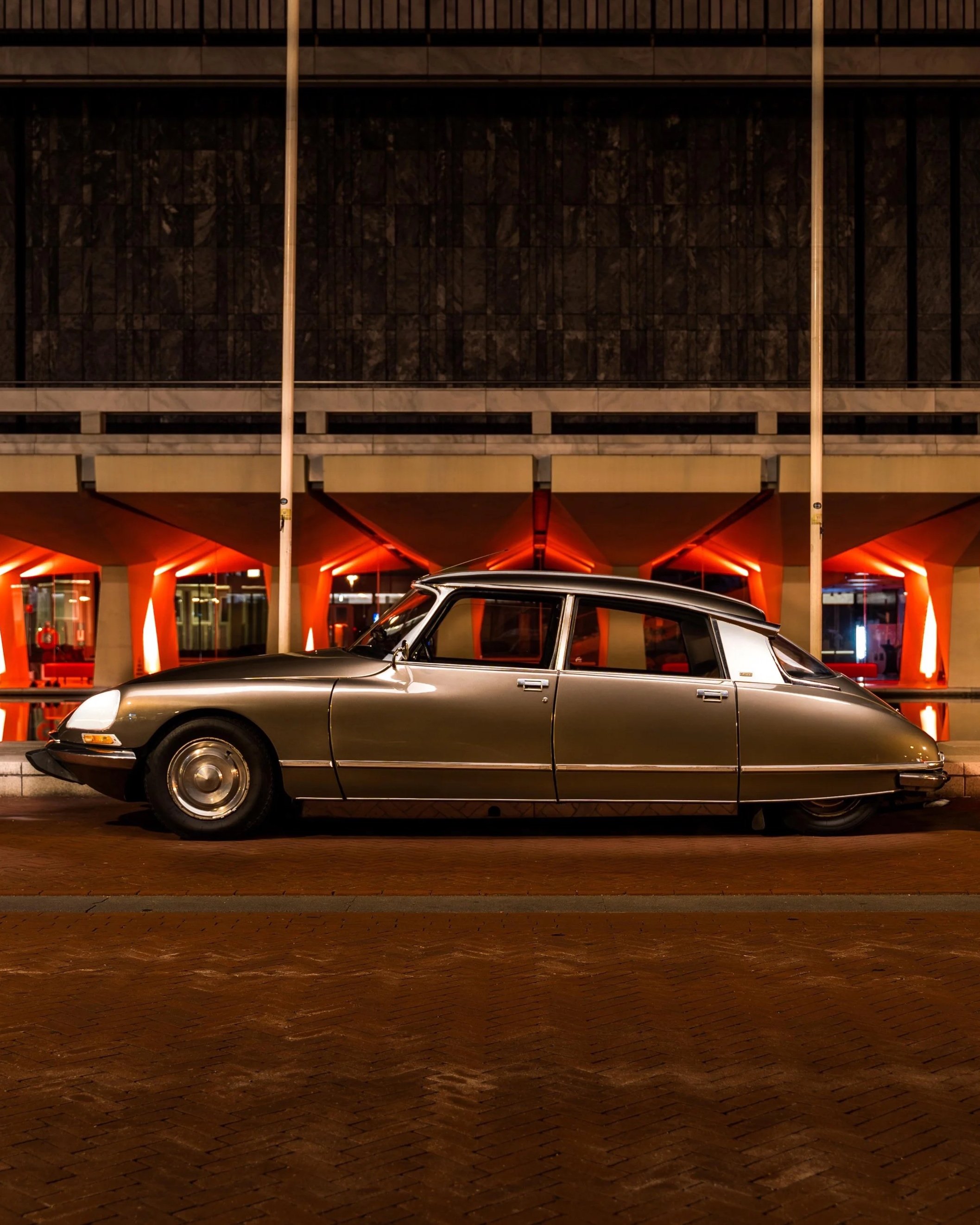
By 1967, Citroën doubled down on its futurism with directional headlights that turned with the steering wheel, illuminating corners before the driver arrived. It was the kind of feature that felt like science fiction, and once again Citroën made it real. The car company Tucker tried to implement this on its cars in 1948 but due to outside circumstances it was iunsuccessful. It did however make it possible with its “cyclops” third headlight in the middle of the car moving up to 10 degrees.
Under the skin, the DS was shaped as much by economics as by imagination. France like many countries in Europe during postwar times had to find out unique ways to generate money for the country, France had the tax horsepower system. This meant that smaller engines were favored or had a tax break, so unlike the DS predecessor the Traction Avant, the DS never received a six-cylinder flagship. Plans for an air-cooled flat-six existed, but funding realities intervened. Even so, the DS never felt underpowered so much as purpose-built, however a six cylinder would have been interesting instead the DS was less brute force, more brilliance.
Decapotable:
Ok, now that we have the history lesson out of the way let’s get the arts, show me this beauty you baited me into by clicking on this article. If the Citroën DS was a goddess, then the décapotable was her evening gown. Not a big fan of the name, I am sure you can figure out why and the relevance and meaning behind it, but it’s logical and cuts straight to the point. If you are still confused, brush up on the French Revolution and the word guillotine.
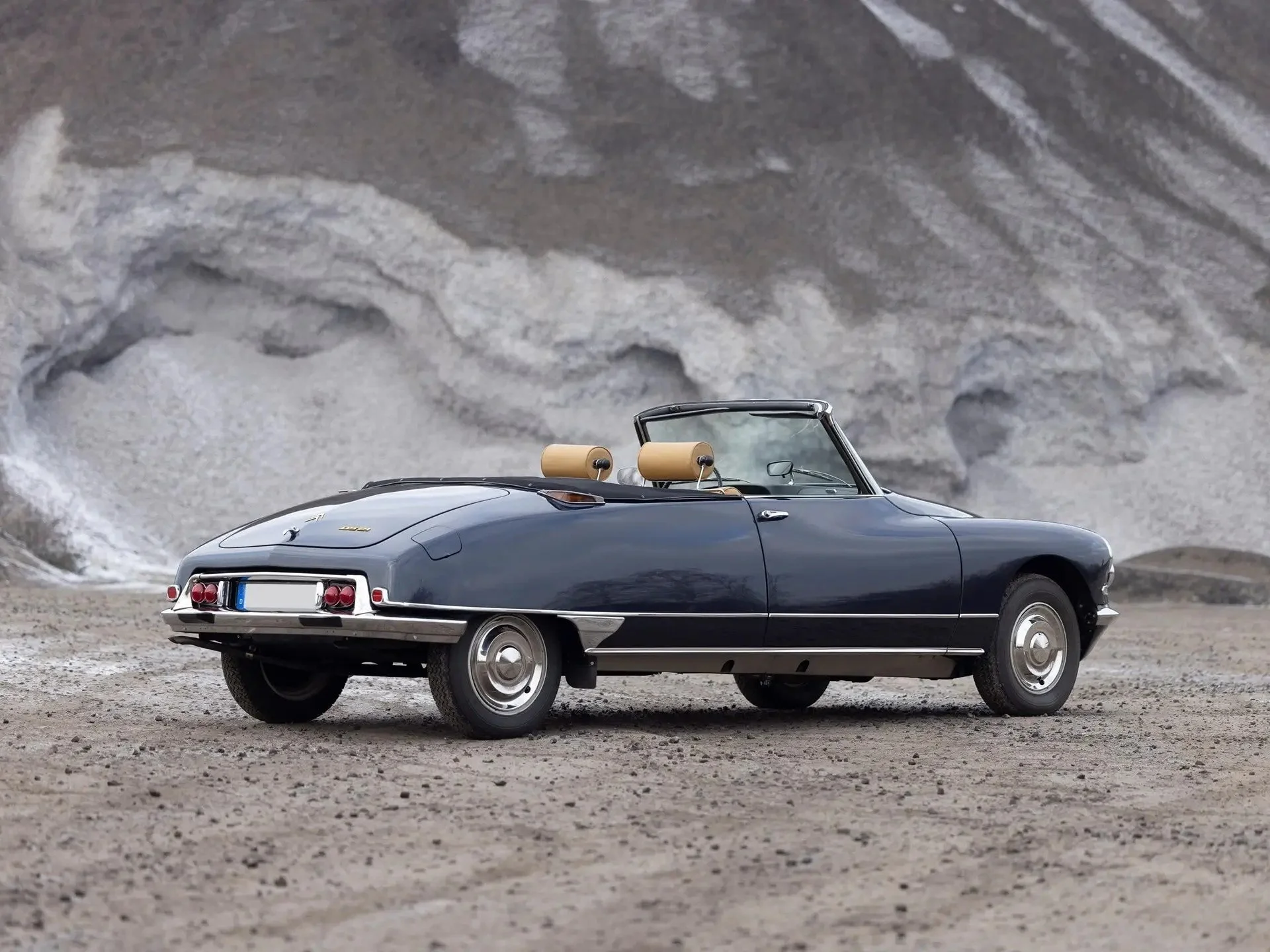
Citroën officially offered an open-top DS from the autumn of 1960 through the summer of 1971, but calling it a factory convertible doesn’t quite tell the whole story. In Citroën brochures it was politely listed as a décapotable, yet every single one was hand-built by the famed French coachbuilder Henri Chapron. This was no mass-market indulgence. It was expensive, painstakingly crafted, and rare—only about 1,400 examples were produced over more than a decade.
The story begins, appropriately, with a bit of audacity. In October 1958, Chapron unveiled his own DS 19 convertible at the Paris Auto Show. Citroën executives were pissed, embarrassed but also impressed—so impressed, in fact, that they did something unusually humble: they asked him if he’d be willing to build an official open DS for the Citroën dealer network. What followed was not a quick handshake, but two years of careful negotiation, engineering debate, and close collaboration.
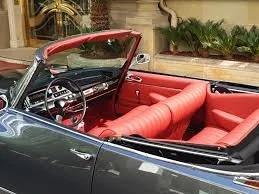
The challenge wasn’t merely aesthetic. Removing the roof from a DS—already unconventional in structure—required a bespoke reinforced chassis. The resulting frame featured strengthened side members and a reinforced rear suspension swingarm bearing box, similar to the DS Break (station wagon), but not quite the same. This was bespoke engineering for a bespoke clientele.
By the fall of 1960, the partnership bore fruit. The first DS 19 Cabriolet “De Série”, officially ordered and marketed by Citroën but built entirely by Chapron, rolled out of his workshop. For roughly ten years, the arrangement remained unchanged. Citroën ordered four-seat cabriolets de série from Chapron, who built them at his nearby annex workshop. Meanwhile, Chapron continued to sell his own DS- and ID-based creations directly, renaming his four-seat convertible “La Croisette” once the Citroën-sanctioned version took precedence.
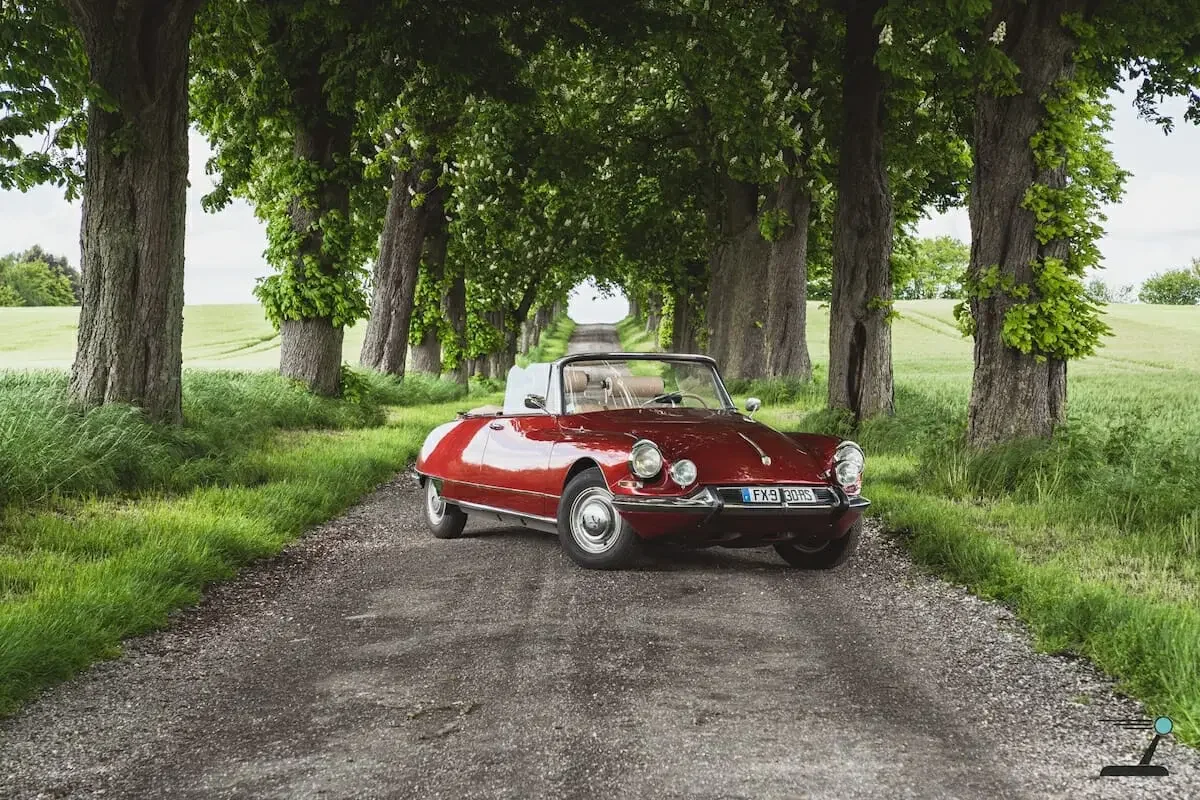
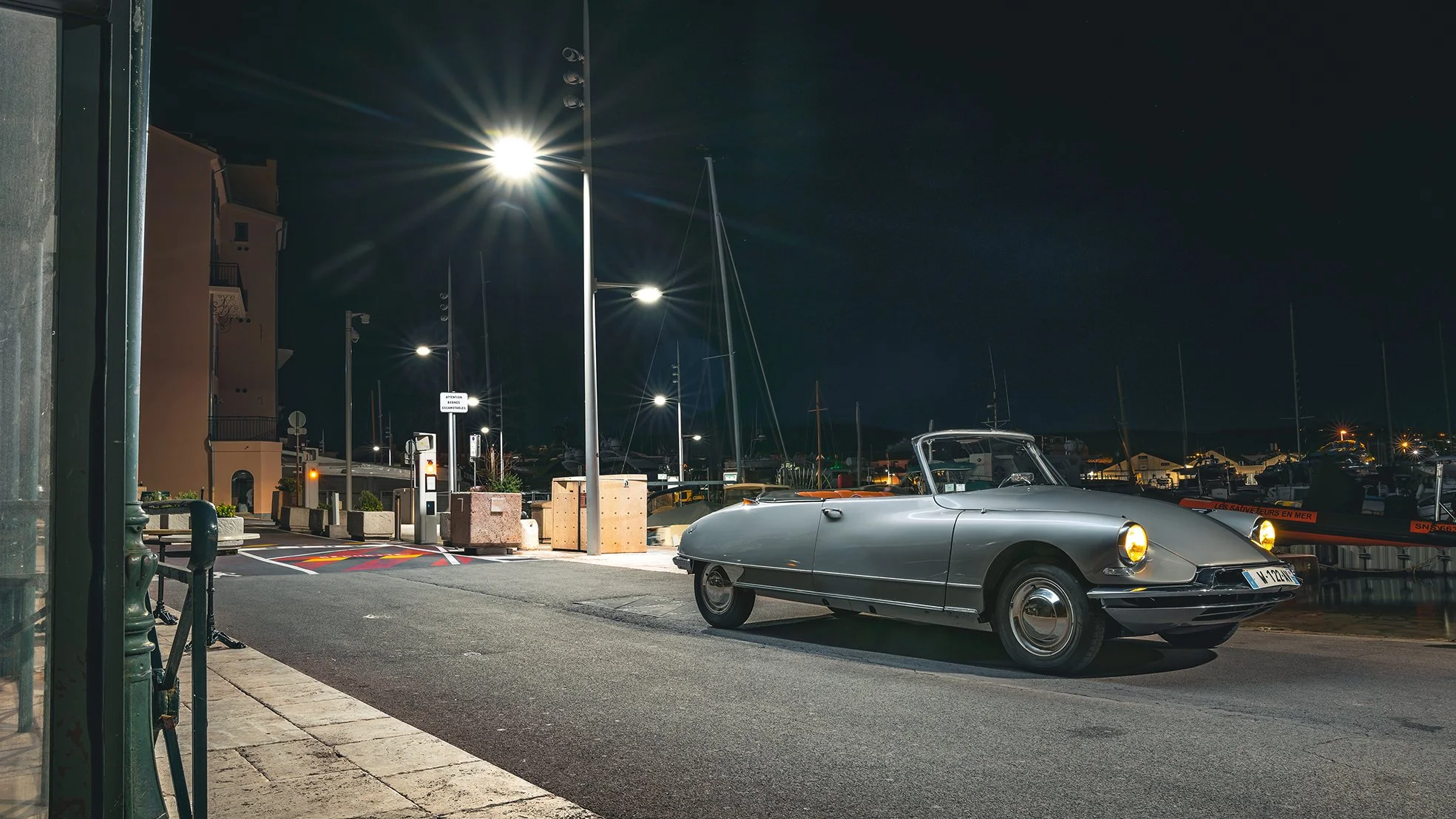
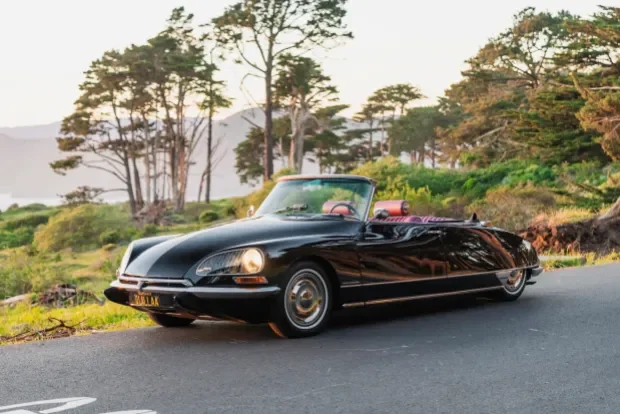
Official Citroën production of the Décapotable ended with the 1971 model year. Today, the DS Décapotable stands as one of the most desirable expressions of the model’s genius: part factory endorsement, part coachbuilt artistry, and entirely French in its refusal to compromise elegance for practicality. It wasn’t meant to be common. It was meant to be unforgettable—and it succeeded effortlessly.
Driving:
Driving a Citroën DS Décapotable was not so much an act of transportation as it was a quiet, theatrical transformation. You just didn’t get into it—you were received by it, like a hand that was guiding a guest who was invited into a beautifully composed idea.
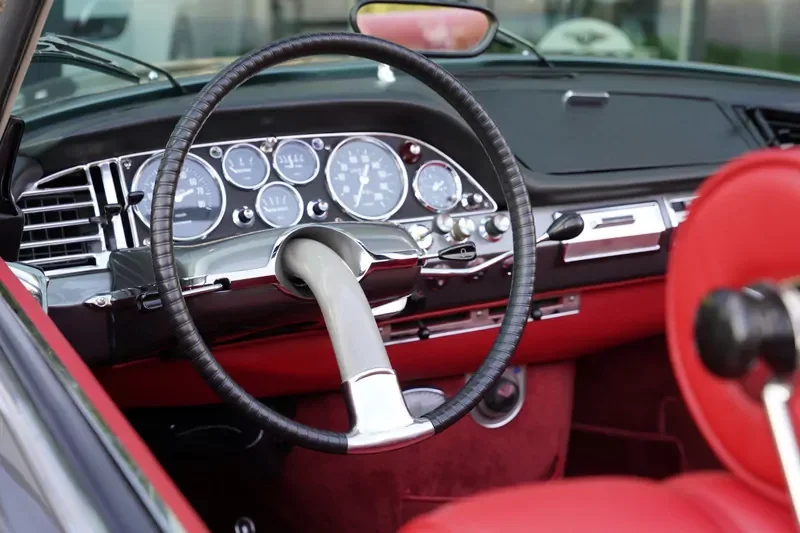
You sat low, legs stretched forward, the steering wheel thin and elegant, the dashboard strange and softly logical in that peculiarly French way. Ahead of you, the long, tapering nose seemed to float rather than point, and when the engine caught and the hydraulics woke, the car rose gently beneath you, as if taking a breath as one would during mediation. That moment alone set the tone: this was not a machine eager to be commanded, but one that asked you to relax and trust.
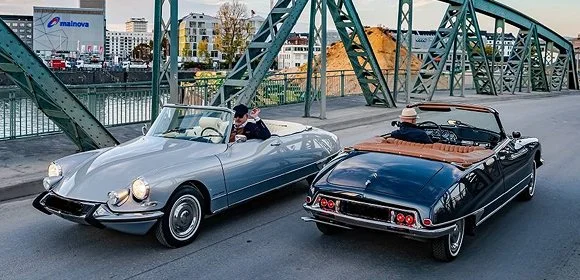
On the move, the DS Décapotable erased the road. Not smoothed it, not softened it—erased it. Cobblestones dissolved into ripples, potholes became irrelevant footnotes. With the roof folded away, the sensation is amplified: wind brushing past, sunlight spilling across the cabin, the world flowing by in a slow, deliberate cadence. The suspension didn’t so much absorb bumps as reinterpret them, translating chaos into calmness, anger into bliss. It felt almost unfair to the laws of nature, like cheating physics in polite company.
The steering was light—almost disconcertingly at first—but never vague, never gone. It guided rather than resisted, as if the car were suggesting the correct path and gently asking you to agree in a very French way. Braking, too, required a recalibration of the senses: the famous DS brake “button” responded with immediate authority, reminding you that this was a car built by engineers who trusted science and intelligence over brute force of stomping the pedal on the floor of the car.
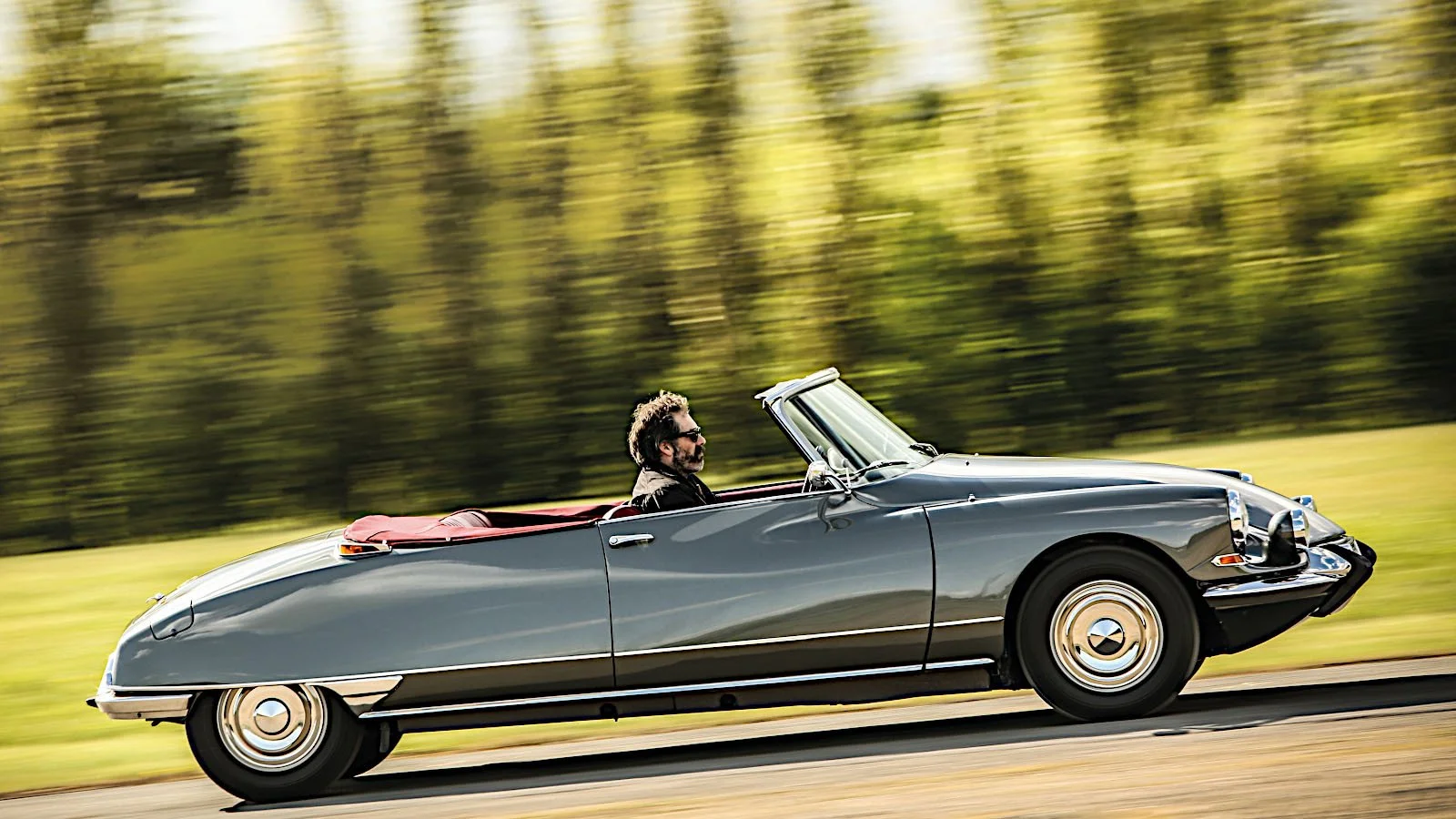
And then there was what it did to the driver.
The DS Décapotable didn’t inflate the ego in the way a Ferrari or Lamborghini would have at the time or even now for that matter. It didn’t shout. It didn’t flex. Instead, it conferred a subtler, deeper confidence—the kind that comes from knowing you’ve chosen understanding over aggression, elegance over noise, maturity over flamboyance. You felt conspicuous without feeling ostentatious. People looked, not because the car demanded attention, but because it quietly rewrote expectations as it passed. They saw relaxation, bliss, zen in you and said to themselves quietly, I want that and need that.
Driving it made you feel composed. Thoughtful. Slightly elevated. As if you were participating in a different tempo of life, one where haste was considered a failure of imagination. It flattered its driver by assuming intelligence, patience, and taste. In a DS Décapotable, you didn’t feel faster than others; you felt freer, detracted from all worldly stress. Not above the world, but gently apart from it. At speed, with the road unspooling and the horizon open, the car seemed to settle into a kind of meditative glide. The open sky above and the car’s unshakeable calm below created a rare alignment: body relaxed, mind unhurried. It was easy to understand why statesmen, artists, philosophers, or anyone who wanted to "disconnect or “unplug” gravitated toward the DS. It didn’t impose a personality—it reflected one.
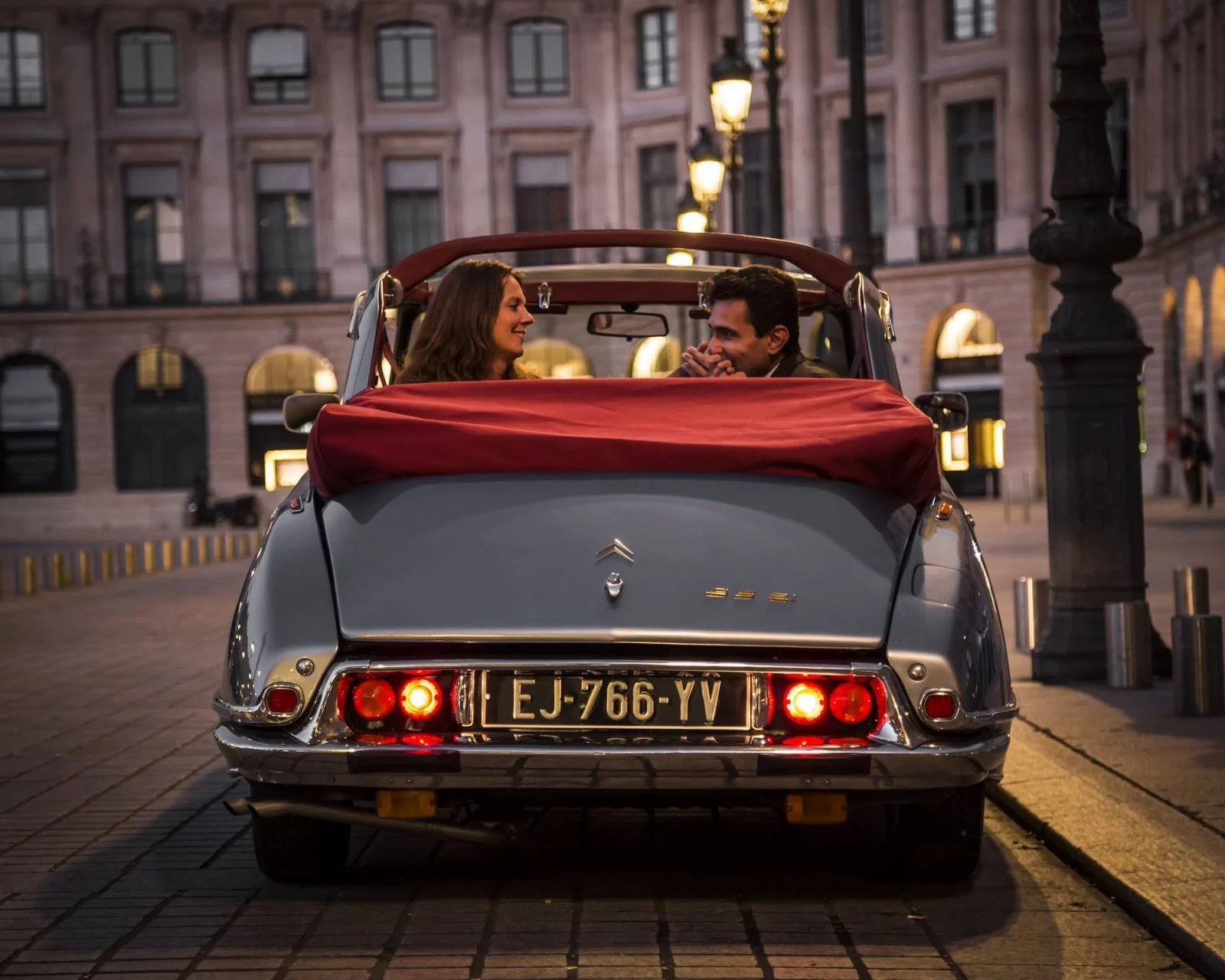
The truth is, driving a Citroën DS Décapotable made you feel less like a driver and more like a traveler moving through a carefully curated dream. It wasn’t about domination of the road, or conquest of distance. It was about harmony—between machine and human, motion and stillness, form and feeling. When you stepped out, the world felt slightly louder, slightly less graceful, how you might feel when leaving a secluded island to go back to the real world. You carried with you the quiet certainty that, for a while, you had experienced motion the way it was meant to be: unforced, intelligent, and almost—dare one say it—spiritual. If you do come across the chance of driving one, wherever you drive it—by the sea, through mountains, or beneath falling leaves, leave everything behind and the DS Décapotable does the same essential thing: it removes friction from experience. It lowers the volume of the world just enough for you to hear yourself think. It replaces urgency with intention. And when you stop, step out, and look back at it resting there, still slightly elevated, still improbably graceful, you feel a lingering calm as though you have left some part of you, a moment, a time, an emotion in that vehicle. Not excitement. Not adrenaline. But serenity—the rarest luxury of all.
Conclusion:
Time has been kind to the DS, not least because it earned it. In 2005, Automobile Magazine ranked it fifth on its list of the “100 Coolest Cars.” Classic & Sports Car later crowned it the most beautiful car of all time, based on a poll of legendary designers including Giorgetto Giugiaro, Ian Callum, and Leonardo Fioravanti. Praise doesn’t come much loftier than that.The Citroën DS wasn’t perfect, practical, or even sensible by conventional standards. But it was daring, imaginative, and unapologetically different. It proved that a car could be an idea first and a machine second—and that sometimes, engineering genius arrives disguised as poetry on wheels.
Talent hits the mark every time while a genius hits what no one else sees. Or in this cases four geniuses.
